September 1, 2026
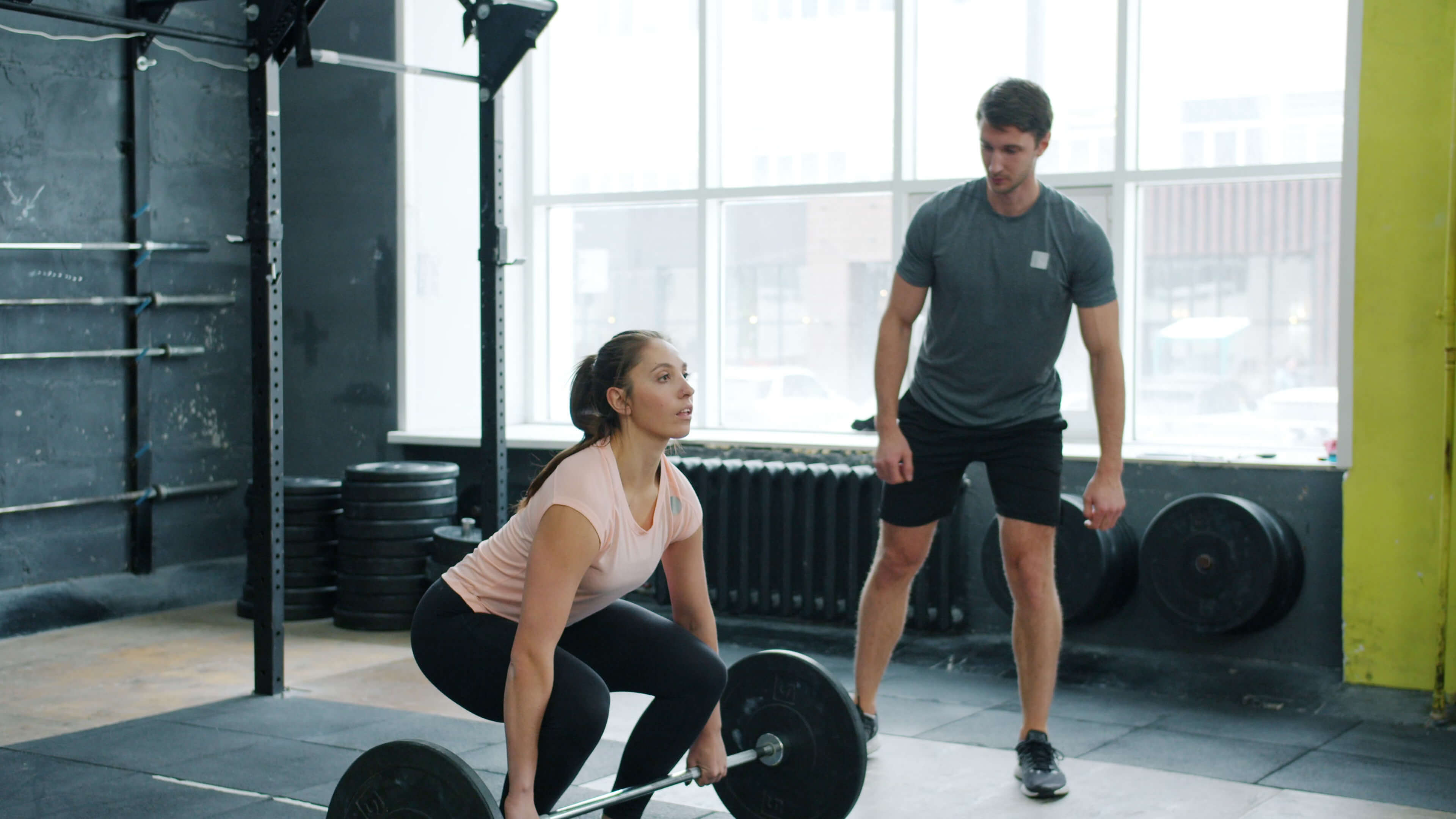
“Am I squatting correctly?”
“Is my back too rounded?”
“My knee went past my toes—is that bad?”
“I had a disc bulge years ago. Should I really be deadlifting?”
These are questions physical therapists hear all the time. And they usually come from a good place: people want to exercise safely and avoid hurting themselves.
But sometimes our desire for perfect form actually creates unnecessary fear around movements our bodies are designed to perform.
Yes, Technique Matters—But There Isn’t One “Perfect” Way to Move
Good technique can help you perform an exercise efficiently, distribute the work where you want it, and gradually handle heavier loads. That’s one reason a physical therapist or knowledgeable coach may give you cues during a squat, deadlift, lunge, or other exercise.
But good technique doesn’t mean every person’s movement should look exactly the same.
Our bodies aren’t identical. We have different limb lengths, mobility, strength, injury histories, and movement experiences. A squat that works well for one person may look slightly different for another.
And movement itself isn’t dangerous simply because it doesn’t look textbook-perfect.
A 2026 review published in Sports examined the research surrounding deadlifting and low-back injury prevention. The authors challenged the traditional idea that maintaining one rigid, “perfect” spinal position is the key to preventing injury. Instead, they concluded:
“Injury prevention should emphasize progressive loading, adaptive movement strategies, and dynamic stability, rather than rigid technique enforcement.”
That’s an important shift in how we think about exercise.
The goal isn’t to make your body afraid of certain positions. It’s to make your body more capable of handling them.
Muscles get stronger when they’re challenged.
Bones respond to loading.
Tendons adapt to stress.
Our cardiovascular system improves when we ask it to work harder.
This principle—adaptation—is one of the foundations of exercise.
If you never challenge your body beyond what it can already comfortably do, there is very little reason for it to become stronger.
That’s why progressive loading is so important.
You might begin a squat using only your body weight. Over time, you add a dumbbell. Eventually, you may use a heavier dumbbell, kettlebell, barbell, or another variation.
The same concept applies to deadlifting, carrying groceries, climbing stairs, running, lifting a child, gardening, or returning to a physically demanding job.
We don’t build resilience by avoiding load forever. We build it by introducing appropriate load and gradually increasing what the body can tolerate.
“But I Have a Bad Back…”
This is where things often get complicated.
Maybe an MRI once showed a disc bulge.
Maybe you’ve had knee pain.
Maybe you’ve been told you have arthritis, a “bad shoulder,” or an old injury that you need to protect.
It is understandable to become cautious after pain or injury. But having a history of pain or an imaging finding does not automatically mean you should permanently avoid squatting, bending, lifting, or loading that part of your body.
In many situations, the opposite is eventually needed.
The question changes from:
“How do I avoid using this area?”
to:
“How do we gradually build this area’s capacity so it can handle what life asks of it?”
That doesn’t mean ignoring pain or loading an injury recklessly. If something is painful or irritated, we may temporarily modify the exercise, range of motion, weight, repetitions, speed, or frequency.
Then, as tolerance improves, we progress.
Think of Strength as a Dimmer Switch, Not an On/Off Switch
People sometimes think an exercise is either “safe” or “unsafe.”
A deadlift is safe or unsafe.
A deep squat is safe or unsafe.
Running is safe or unsafe.
But the body is much more complicated than that.
Consider the difference between picking up a 10-pound kettlebell five times and attempting a 300-pound deadlift you’ve never trained for.
It’s technically the same basic movement pattern—but it’s obviously not the same demand on your body.
That’s why dose matters.
How much weight? How many repetitions? How often? How quickly did we increase it? What has your body recently been accustomed to doing?
In fact, the same 2026 review noted that rapid changes in training exposure and cumulative load may be more important to injury risk than an isolated deviation from a prescribed “neutral” position of the spine (meaning you kept your back completely straight).
The appropriate exercise at an appropriate dose can build capacity. Too much, too soon can exceed your current capacity.
One of the most important things we want our patients to understand is that the human body isn’t a fragile machine that breaks the moment you bend incorrectly.
It is a living system capable of adapting.
We certainly want to teach good movement strategies. We want your hips, legs, trunk, upper back and other muscles/regions contributing effectively. We want to choose an appropriate starting point and progress thoughtfully.
But we don’t want you spending your life afraid that one imperfect squat, rounded-back lift, or knee-over-the-toes position will damage you.
Instead of chasing perfect movement, work toward strong, confident, adaptable movement.
Learn it → Load it → Adapt → Progress
Learn the movement.
Find a starting point your body tolerates.
Practice it.
Load it appropriately.
Then gradually ask your body to do more.
That’s how capacity is built.
If pain, an old injury, or simply the fear of “doing it wrong” is keeping you from squatting, lifting, exercising, or doing the things you want to do, the New Life Physical Therapy team can help.
Our physical therapists can help you understand what your body is capable of today, determine an appropriate starting point, and develop a personalized plan to progressively build your strength and capacity. Whether you’re returning from an injury, dealing with a long-standing problem, or simply want to feel more confident lifting and exercising, we can help you move beyond fear and toward strength.
Don’t let an old diagnosis—or fear of a future injury—decide what your body is capable of. Reach out to the New Life Physical Therapy team to schedule an evaluation and let us help you build the strength, confidence, and resilience to keep doing the things that matter to you.
Because the goal isn’t a body that never experiences stress. The goal is a body that’s prepared for it.
Evidence Spotlight: Cherni B, Marzouki H, Selmi O, et al. “Beyond the Neutral Spine: A Narrative Review and Modern Framework for Low Back Injury Prevention in Deadlifting.” Sports. 2026;14(4):151. doi:10.3390/sports14040151.
Featured Posts

The Importance of Balance – Insights from a Physical Therapist
August 20, 2023

Why Spine Stability is Crucial for Everyday Activities
May 8, 2024
Promoting Emotional Resilience for a Holistic Approach to Health
February 4, 2025

Don’t Lose What Matters Most: Protecting Muscle During Weight Loss
June 17, 2025
Choose your E-book